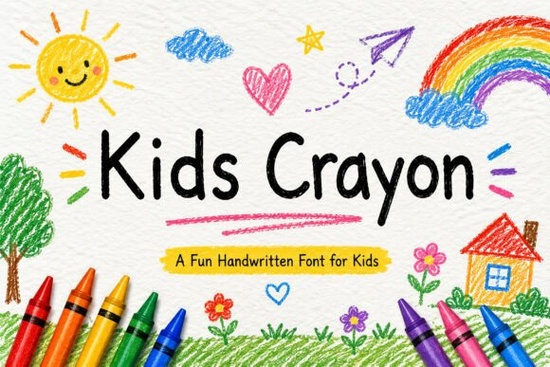
If you spend much time designing materials for children, you already know that the right font can completely transform a project. Kids Crayon captures that waxy, hand-drawn energy you get from a real box of crayons every letter looks like it was sketched by a child who’s just learning to write, which is exactly what makes it feel so genuine. It’s a playful handwritten font that works beautifully for classroom resources, craft projects, and brands that want to feel friendly without being fussy.
What actually makes a crayon-style font look convincing?
Not all “handwritten” fonts pull off the crayon effect. Many end up looking too smooth or too messy. Kids Crayon gets the balance right because its strokes are slightly uneven and softly textured similar to a real wax line pressed onto paper. The letters have a gentle bounce that mimics a child’s rhythm, and the terminals often look like the natural lift of a crayon. This isn’t a font that tries too hard; the imperfections are subtle and consistent, which matters when you’re printing at larger sizes for posters or fabric transfers.
If you’ve used a strawberry script font that leans sweeter and more polished, you’ll notice Kids Crayon is looser and feels more spontaneous. That contrast can be useful when you need different voices inside the same school activity pack or storybook.
Can you use this font for Cricut projects and print-on-demand products?
Yes, and that’s one of the first things crafters ask. The font includes PUA-encoded characters, which means third-party software like Cricut Design Space, Silhouette Studio, or Adobe Illustrator can access every glyph without extra steps. The organic, slightly offset edges actually help when you’re cutting vinyl or iron-on material small irregularities are less noticeable than a too-perfect curve that might show cutting errors. For print-on-demand sellers, the bold, hand-drawn weight works well on children’s t‑shirts, tote bags, and nursery decor because it stays readable even after fabric printing.
When I test fonts for sticker sheets and party invitations, I always check how the lowercase ‘a’ and ‘e’ behave at small sizes. Kids Crayon holds its legibility down to around 14pt on cardstock, and the numbers and punctuation are just as playful, making it easy to use for birthday ages, event dates, or simple pricing stickers.
Is Kids Crayon a good match for educational worksheets?
Teachers and educational content creators often need fonts that feel approachable but don’t overwhelm the page. Because the letterforms are round and open, they sit well inside handwriting practice lines. The font supports multilingual characters, so you can type directions in English and Spanish within the same template without switching typefaces. For preschool math and tracing sheets, the uppercase letters are distinct enough that children won’t confuse ‘I’ and ‘l’, something that happens with narrower scripts.
If your worksheet calls for a contrast between main text and a slightly softer note, you might pair it with a book signature script for teacher notes or instructions. The combination keeps the whole page cohesive without looking like a single font stretched too far.
How does the font hold up across different design styles?
While Kids Crayon is firmly rooted in a childlike aesthetic, it crosses over into several niches quite naturally. Toy packaging designers appreciate that it mimics the kind of lettering you’d see drawn with a crayon right on the box flap. Children’s book cover designers use it for titles that need warmth without the weight of a heavy display font. Even social media graphics for parenting blogs and daycares feel more personal when the headline looks like it was scribbled during craft time.
For projects that need a more whimsical, almost bouncy contrast, you could layer this font next to something like Winky Swing, which carries a similar fun energy but with a different baseline rhythm. I’ve done this for event banners where the main word uses Kids Crayon and the supporting phrase switches to a lighter script the visual story stays playful without repetition.
What’s included in the font download?
You get a full set of uppercase and lowercase letters, numbers, and common punctuation. The multilingual support covers most European languages. Since it’s a PUA-encoded OpenType file, you don’t need extra software to access alternates. The character set is gathered into a single weight, which makes it straightforward to install and start using right away no need to hunt for a mysterious “bold” version that doesn’t exist.
Designers working on branding for a small toy shop or a children’s play café can rely on the consistent weight to keep logo marks friendly and sturdy. And if you later need a complementary font that adds a bit more flow for taglines, Juicy Come offers a juicy, rounded script that pairs well without stealing attention.
Where does a hand-drawn font like this fit best?
It naturally outperforms digital-looking type in any space where you want to suggest human touch. I’ve seen it used effectively on:
- Classroom decorations – name tags, cubby labels, rule charts
- Children’s party printables – cupcake toppers, bunting, thank-you cards
- Print-on-demand merch – kids’ hoodies, organic cotton onesies, drawstring bags
- Nursery wall art – alphabet prints, affirmation posters, growth charts
- Educational content – activity sheets, letter tracing templates, reward coupons
- Social media captions – quotes overlaid on family photos, announcement graphics
One thing to keep in mind: because the texture is part of the letter shape, you don’t need to add artificial filters or distress overlays to sell the crayon effect. That saves time when you’re producing multiple variants of the same product listing.
How does it compare with other playful fonts on Creative Fabrica?
If you’ve browsed the script or handwritten sections, you’ve probably seen fonts that lean more toward brush lettering or elegant calligraphy. Stylish alphabet scripts can look great for wedding signage, but they don’t carry the same tactile, childhood memory that a crayon font does. Kids Crayon isn’t trying to be beautiful in a traditional sense it’s aiming for sincerity and nostalgia, and that’s a strength when the audience is children or parents.
The font holds its own among more decorative options because it stays useful at a wide range of sizes and backgrounds. I’ve used it on dark-colored paper with a white outline and the crayon texture still came through clearly in print.
Getting started checklist
Before you import the font into your next project, run through these quick steps:
- Install and test – type a sample phrase in both uppercase and lowercase to see spacing and letter connections.
- Set context – decide whether the font will be the only voice on the page or if you’ll pair it with a clean sans-serif for body text.
- Preview at real size – print a test at actual dimensions if it’s for physical products; thin strokes can disappear on certain paper stocks.
- Check language needs – if you plan to use accents or special characters, type them now to confirm they appear.
- Duplicate for variations – make a copy of your file and adjust color or outline to see how the crayon effect shifts.
A playfully imperfect font like this one thrives when you lean into the theme rather than trying to make it overly precise let the letters look like they were just drawn, and you’ll get the most charming results.
Learn More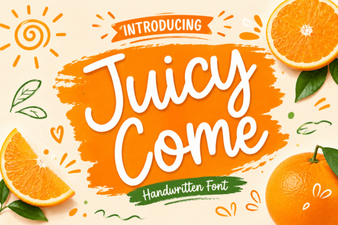 Juicy Come Font: Creative Typography Inspirations
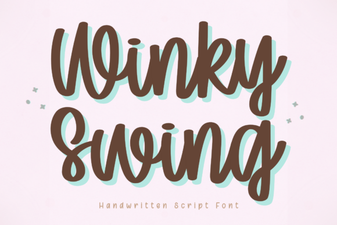 Winky Swing Font: Playful Typography for Creative Projects
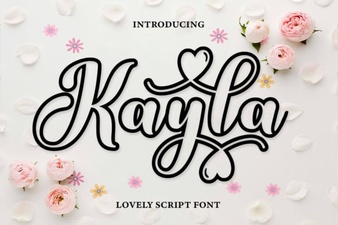 Kayla Outline Font: Creative Design & Project Ideas
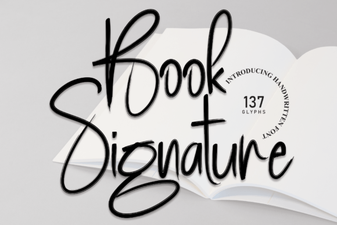 Best Book Signature Fonts for Authentic Authorial Style
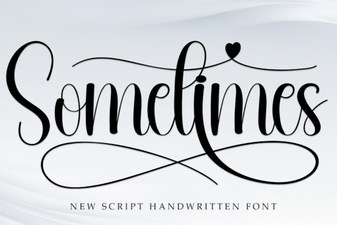 Sometimes Font: Creative Display Typography Ideas
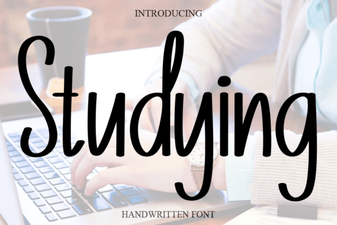 How Studying Font Boosts Design and Usability